22.03.2026
https://www.liderhaber.com.tr/petrodolar-belasi
The international monetary system established in 1944 in the town of Bretton Woods, New Hampshire, formed the cornerstone of global trade by pegging the U.S. dollar to gold. However, by the late 1960s, French President Charles de Gaulle began demanding the return of his country’s gold at the fixed rate of $35 per ounce from Washington. As gold reserves in the U.S. Treasury rapidly declined, President Richard Nixon announced in a historic televised speech on August 15, 1971, the unilateral suspension of the dollar’s convertibility into gold. Thus, the Bretton Woods system effectively collapsed, and the dollar lost its tangible backing.
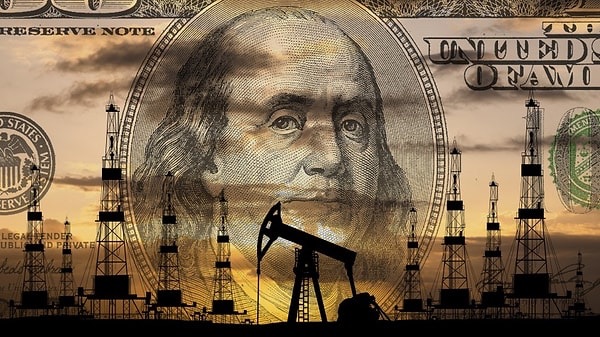
The move that prevented the dollar from falling into a vacuum came in 1973. The United States reached an agreement with the Saudi royal family, guaranteeing military protection in exchange for pricing oil exclusively in U.S. dollars. In this way, the famous Petrodollar system was established as an alternative to Bretton Woods. The world became dependent on dollars to purchase oil, oil revenues were recycled into U.S. Treasury bonds, and Washington gained the privilege of running virtually unlimited deficits.
However, in the same year, the Yom Kippur War broke out. Saudi Arabia, under the leadership of King Faisal of Saudi Arabia, along with OAPEC countries, imposed an oil embargo against the West for supporting Israel. Oil prices quadrupled, pushing Western economies into a deep recession. King Faisal was assassinated on March 25, 1975, in Riyadh by his U.S.-educated nephew Prince Faisal bin Musaid during an official reception. In the aftermath, Gulf monarchies—keenly aware of their vulnerability—aligned themselves under the shadow of the United States, and the petrodollar system operated unquestioned for half a century.
Now, roughly fifty years later, the dollar is once again in trouble. As of March 2026, U.S. national debt has reached $39 trillion. Over the past year, debt has grown at an average rate of $7.23 billion per day. The Congressional Budget Office projects that the federal deficit will reach $1.9 trillion in fiscal year 2026 and that public debt will climb to 120% of GDP by 2036. Interest payments alone will exceed $1.3 trillion in 2026—nearly four times the $345 billion recorded in 2020.
The very petrodollar system that enabled the United States to carry this massive debt burden has long been showing cracks. According to IMF COFER data, the dollar’s share of global foreign exchange reserves has declined from its 72% peak in 2001 to 56.9% in the third quarter of 2025—the lowest level since 1994. The dollar’s share in foreign central bank reserves has hit a 30-year low. China has reduced its U.S. Treasury holdings from $1.3 trillion in 2013 to $682 billion as of November 2025. This decline should be seen as a direct reflection of global diversification trends and backlash against the use of the dollar as a sanctions weapon.
Indeed, as central banks move away from the dollar, they are increasingly turning to gold. From 2022 to 2024, annual gold purchases exceeded 1,000 tons for three consecutive years: a record 1,136 tons in 2022, 1,037 tons in 2023, and 1,045 tons in 2024. This three-year total is 104% higher than the 2014–2016 period. In 2025, Poland purchased 102 tons, Kazakhstan 57 tons, and China officially 27 tons. Analysts estimate that China’s actual gold reserves exceed reported figures by more than double, surpassing 5,000 tons. According to a World Gold Council survey, 95% of central banks expect global gold reserves to increase over the next 12 months.
One of the most critical breaches in the petrodollar system is the entry of the Chinese yuan into oil trade. In 2018, China launched yuan-denominated crude oil futures on the Shanghai International Energy Exchange. In 2023, China and Saudi Arabia conducted their first yuan-based oil transaction. As of January 2025, countries including Russia, Iran, Venezuela, Saudi Arabia, the UAE, and Egypt have begun using the “petroyuan.” In June 2024, it was reported that Saudi Arabia chose not to renew its petrodollar agreement, opening the door to oil sales in multiple currencies, including the yuan, euro, and yen. As the world’s largest oil importer, China’s economic gravity is fundamentally shaking the half-century dominance of the dollar.
Alternative infrastructures to the dollar and SWIFT are also rising rapidly. China’s Cross-Border Interbank Payment System (CIPS), established in 2015, operates in 121 countries as of June 2025, with 176 direct and 1,514 indirect participants. In 2024, CIPS processed 175.49 trillion yuan (approximately $24.5 trillion), marking a 42.6% increase from the previous year. By November 2025, the mBridge platform had processed over $55.5 billion, with digital yuan accounting for 95% of the volume. BRICS countries are adopting this infrastructure to build a parallel financial system that enables more than 180 countries to trade directly in yuan, bypassing the dollar. Moreover, the BRICS-led UNIT system—designed as an alternative to SWIFT—has been under development for some time and has made significant progress.
The U.S.-Iran tensions that escalated in February 2026 dramatically exposed these accumulated vulnerabilities. Iran’s closure of the Strait of Hormuz sent oil prices soaring from around $60 per barrel in January 2026 to over $100. On March 14, 2026, Iran imposed a condition for passage through the strait: oil must be sold in Chinese yuan. According to CNN, this yuan condition effectively split the oil market into two tiers—one with a “war premium” for those paying in dollars and another with a “security discount” for those paying in yuan. This development should be interpreted as a direct attack on the foundations of the petrodollar system.
All these data points reveal a fundamental reality. The dollar stepped off gold in 1971 and climbed onto oil. Now, it faces the risk of slipping off that support as well. The United States spends approximately $900 million per day to maintain its presence in the Strait of Hormuz, yet the invisible infrastructure of global trade is increasingly shifting toward systems beyond Washington’s control. A January 2025 report by the Asia Society Policy Institute outlines three scenarios: gradual evolution, sudden shock, or a rapid shift toward Asia. The report emphasizes that the U.S. must modernize its dollar-based global infrastructure, strengthen partnerships in the Gulf, and develop frameworks to manage parallel payment systems.
History does not repeat itself exactly, but it often rhymes. In 1971, De Gaulle’s demand for gold shook the system; in 1973, King Faisal’s oil embargo brought the West to its knees; shortly thereafter, Faisal was assassinated, and the Gulf fell into line. Today, Saudis are selling oil to China in yuan, Iran is tying passage through Hormuz to yuan transactions, BRICS nations are building alternatives to SWIFT, and central banks are accumulating gold at record speed.
Meanwhile, the United States’ $39 trillion debt continues to grow by more than $7 billion per day. The U.S. must either place the dollar onto a new foundation after dismounting from oil—or resort to every possible means to remain on oil’s back. Either path signals that turbulent days lie ahead for the global economy.
 Memoirs of an Economist